


Escanaba in da Moonlight
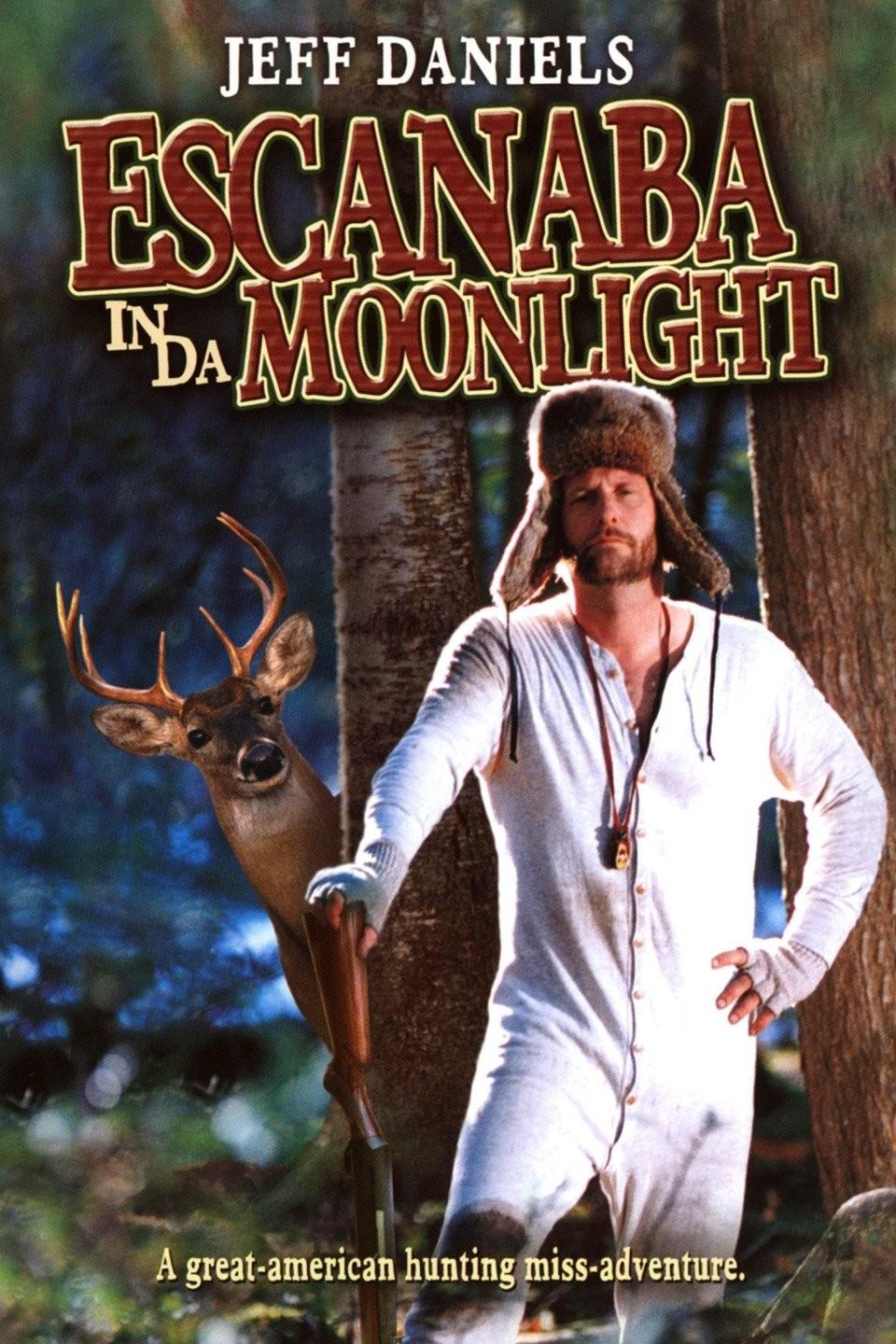
Every November 15, on opening day of firearm season, deer hunters head into the woods with family traditions, rituals and superstitions they hope will bring home a buck. But perhaps no hunter is more famous for his bad luck than Reuben Soady, the Buckless Yooper from Jeff Daniels' Escanaba in da Moonlight.
Released in 2001, the cult classic follows 35-year-old Reuben, the oldest member of his family never to bag a buck, as he tries to break his unlucky streak at deer camp.
Filmed entirely in the Bays de Noc area, the movie brought Hollywood to Escanaba, with local landmarks, businesses and residents helping bring the story to life. More than two decades later, fans can still explore several of its filming locations and discover the stories behind this Yooper classic.
Bringing Escanaba in da Moonlight to Life
Before becoming a movie, Escanaba in da Moonlight debuted as a stage production in 1995 at Jeff Daniels' Purple Rose Theatre in Chelsea, Michigan. It later enjoyed a successful run at Detroit's Gem Theatre, where its quirky characters and Upper Peninsula humor resonated with audiences.
When Daniels decided to bring the story to the big screen, Hollywood wasn't eager to finance a movie about a Michigan deer camp. According to local accounts, he raised approximately $1.5 million from Michigan investors, including fans of the stage production.
Determined to capture the authentic U.P., Daniels brought the production directly to Escanaba. Filming took place over 30 days in March, with a crew of approximately 55 people working six days a week, often for 12 hours a day. Daniels even stayed in his camper trailer outside the Escanaba production office.
The movie premiered at Detroit's Fox Theatre on October 22, 2000, followed by two sold-out Upper Peninsula screenings at Island Resort & Casino. Its theatrical release followed in January 2001.
Beyond the excitement of filming, the production made a lasting impact on the community. Local residents appeared as extras, businesses welcomed the cast and crew, and Daniels participated in fundraisers, including Bowl for Kids' Sake. The production was estimated to have contributed approximately $1 million to the local economy.
Visit Filming Locations & Cast Favorites
Several recognizable locations from the film remain part of the Bays de Noc community. From a vintage downtown diner to a longtime Rapid River bar, these stops offer fans a chance to experience the real places behind the fictional adventures.
Rosy's Diner | Escanaba
A favorite of the film's producers, Rosy's Diner had the vintage atmosphere Daniels wanted for the movie. Its classic interior was featured without alterations.
The diner's namesake, Rosy, even made a cameo appearance. Watch closely as Reuben drives through downtown on his way to deer camp, and you'll spot her pouring coffee in the background.
Ludington Street | Escanaba
Downtown Escanaba's main street appears near the beginning of the movie as Reuben heads out of town, determined to finally bag his buck.
In one memorable scene, children aboard a school bus encourage him to roll down his window before teasing him about his unsuccessful hunting record. The scene featured actual Escanaba students, along with two of Jeff Daniels' children.
Visitors can recognize the downtown setting while exploring Ludington Street's shops, restaurants and historic buildings.
Escanaba Athletic Field | Escanaba
One of the movie's largest scenes brought nearly 1,000 local residents to the Escanaba Athletic Field during Reuben's unforgettable hallucination.
Braving zero-degree March temperatures, residents filled the bleachers to taunt the Buckless Yooper. Each participant paid $2, with proceeds supporting the school's athletic budget.
Look closely at the front row, and you'll see a child holding a "Buckless" sign. That's Jeff Daniels' son!
Swallow Inn | Rapid River
The Swallow Inn became the fictional Porcelain Bus, where Reuben's brother Remnar wins a case of Leinenkugel's during an unusual dancing competition involving toilet paper and a long dowel rod.
The production crew appreciated the bar's authentic Upper Peninsula atmosphere, so few changes were needed for filming. Three local bartenders and several residents also appeared as extras.
William Bonifas Fine Arts Center | Escanaba
Although not featured on screen, the William Bonifas Fine Arts Center played an important role in the production. It hosted local casting auditions and a meet-and-greet where hundreds of residents gathered for autographs and photos with Jeff Daniels.
Proceeds from the event, along with money raised through the movie's local premiere, supported the art center.
Dobber's Pasties | Escanaba
No Upper Peninsula experience is complete without a pasty, and the cast and crew enjoyed their share from Dobber's.
Daniels liked them enough that he later had pasties shipped to his Purple Rose Theatre in Chelsea for the stage production's cast and crew.
For visitors, stopping for a traditional U.P. pasty is a fitting addition to the movie-inspired adventure.
Soady Family Deer Camp
Perhaps the movie's most recognizable setting is the Soady family's rustic deer camp. While it seems like something created for the film, its exterior was actually a family-owned cottage near Rapid River.
Jeff Daniels and Robert Brown wanted an authentic hunting camp and found the perfect location through a local connection.
The cottage was built in 1964 by Escanaba resident Reinhold "Einie" Bittner. During the 1960s and 1970s, it served as an eating shack for loggers before becoming a family retreat. Einie's son, Terry Bittner, eventually inherited the property.
When filmmakers approached the family, they agreed to let the production use the cottage for the Soady deer camp's exterior scenes.
Filming at the Bittner Family Cottage
Filming at the cottage lasted approximately two and a half weeks, with Einie, Gladys and Terry Bittner on-site during that time.
All exterior deer camp scenes were filmed there, while interior scenes were created on a soundstage inside the former Racquetball Club on North 26th Street in Escanaba.
March weather presented challenges. As snow and ice began to thaw, Terry, an excavator, kept his bulldozer on-site to clear muddy areas and help crews move equipment. Roads were also plowed or temporarily closed to prevent interruptions.
For Terry, watching the filmmaking process was unforgettable. "It was my first time ever being on a movie set," he recalled. "Seeing how a movie is made is so cool. There were 55 crew and five actors. They would work, work, work eight hours to build a set, and they would shoot for a minute and be done. All that work then off to the next shot."
He remembers Daniels and the crew as friendly and easy to work with.
More than two decades later, the Bittner family still hears from fans hoping to find the famous deer camp. The family has since expanded the cottage and hopes to keep it for future generations.
Although it remains an important part of movie history, the property is privately owned and not open for tours or public visits.
More Escanaba in da Moonlight Trivia
A few additional facts make this Yooper classic even more memorable:
It's part of a trilogy. Daniels also wrote Escanaba in Love, set in 1944, and Escanaba, set in 1922, exploring earlier generations and stories connected to the community.
The cast had theatrical roots. Several principal actors, including those portraying Remnar Soady, Albert Soady and Jimmer Negamanee, were associated with Daniels' Purple Rose Theatre.
The crew enjoyed local hospitality. Along with Rosy's Diner and Dobber's Pasties, cast and crew visited Hereford & Hops, where Daniels reportedly enjoyed the locally brewed beer.
A Movie That Became Part of Escanaba
What started as Jeff Daniels' story about a buckless Yooper became something much bigger for Escanaba. From local residents appearing on screen to businesses welcoming the cast and crew, the community helped bring Escanaba in da Moonlight to life.
More than two decades later, the film remains a source of local pride, with stories and memories that continue to connect generations of Yoopers and movie fans. Reuben Soady's bad luck may not have lasted forever, but the movie's place in Escanaba's history certainly will.